
Updated: October 20, 2026 | Category: Commercial Electric Vehicles / Electric Van News / China Auto Export
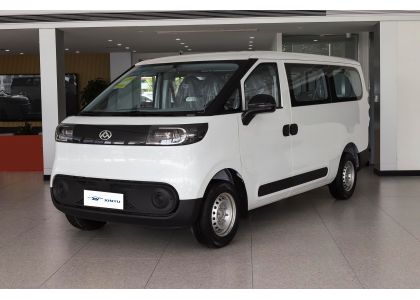
The 2026 MAXUS Dana V1 electric van, also known as the SAIC MAXUS Dana V1 (大拿V1), is a compact battery-electric commercial vehicle designed for urban deliveries, logistics operations, small businesses, and commercial fleet applications.
With battery options of 42 kWh and 50 kWh, multiple cargo and passenger configurations, and up to 350 km of claimed CLTC driving range in selected versions, the MAXUS Dana V1 provides a practical solution for businesses considering the transition from conventional fuel-powered delivery vehicles to electric transportation.
International buyers may also recognize the related MAXUS eDELIVER 5, which is offered in overseas markets. However, battery capacities, driving ranges, dimensions, and standard equipment may differ between Chinese domestic and international versions.
As global interest in electric light commercial vehicles continues to expand, understanding the Dana V1's specifications, cargo capacity, operational advantages, and export purchasing requirements is increasingly valuable for international distributors.
In this comprehensive guide, Tianjin Xinyu Automobile Sales Co., Ltd. explores the latest MAXUS Dana V1 specifications, battery configurations, commercial applications, pricing considerations, and China vehicle sourcing opportunities.
Get the Latest MAXUS Dana V1 Export Quotation
The MAXUS Dana V1 is a compact electric commercial van developed by SAIC MAXUS, a Chinese automotive manufacturer specializing in passenger and commercial vehicles.
Designed for practical urban transportation, the vehicle combines electric propulsion with a cargo-friendly layout, making it suitable for businesses looking to reduce fuel dependency and improve delivery operations.
The 2026 China-market lineup includes low-roof cargo vans and multifunction versions, with configurations designed for different transportation requirements.
Fully electric commercial van with zero tailpipe emissions
42 kWh and 50 kWh battery configurations
Up to 350 km CLTC range in selected multifunction versions
Up to 330 km CLTC range in specified cargo versions
Compact body dimensions for urban mobility
3-seat cargo and 6-seat multifunction configurations
Practical loading space for commercial applications
Electric powertrain suited to urban stop-and-go driving
Multiple vehicle configurations for business requirements
For fleet operators, independent delivery businesses, and wholesale buyers, the Dana V1 provides an alternative to conventional gasoline or diesel-powered commercial vans.
The following specifications refer to the 2026 China-market, standard-wheelbase low-roof Dana V1 lineup.
| Specification | 2026 MAXUS Dana V1 |
|---|---|
| Manufacturer | SAIC MAXUS |
| Vehicle Model | Dana V1 |
| Model Year | 2026 |
| Vehicle Type | Compact Electric Commercial Van |
| Energy Type | Battery Electric Vehicle (BEV) |
| Battery Options | 42 kWh / 50 kWh |
| Driving Range Standard | CLTC |
| Cargo Version Range | 301–330 km |
| Multifunction Version Range | 340–350 km |
| Overall Length | 4,800 mm |
| Overall Width | 1,870 mm |
| Overall Height | 1,960 mm |
| Wheelbase | 3,100 mm |
| Cargo Compartment Length | 2,653 mm |
| Cargo Compartment Width | 1,704 mm |
| Cargo Compartment Height | 1,455 mm |
| Cargo Version Seating | 3 Seats, 2-Seat Option |
| Multifunction Version Seating | 6 Seats, 5-Seat Option |
| Rated Payload, Cargo Versions | Approximately 1,105–1,420 kg, Depending on Specification |
| Country of Origin | China |
Important: The data above relates to specified low-roof Chinese domestic-market configurations. Longer-wheelbase models and international eDELIVER 5 versions may have different specifications. Confirm the exact model, vehicle identification information, battery, permitted payload, and equipment before ordering.
One of the most important factors when choosing a commercial electric vehicle is whether its battery capacity matches daily delivery requirements.
The 2026 MAXUS Dana V1 offers different battery and range options designed for varying operational needs.
The 42 kWh Dana V1 cargo configuration provides a published CLTC range of approximately 301 km.
The 42 kWh multifunction version is listed with a CLTC range of approximately 340 km.
This configuration may be suitable for businesses operating predictable daily routes with access to regular charging.
The 50 kWh cargo version offers a published CLTC range of approximately 330 km, while the corresponding multifunction version is rated at approximately 350 km.
For businesses requiring longer daily operating distances, a larger battery may reduce the frequency of charging stops.
| Configuration | Battery | CLTC Range |
|---|---|---|
| Low-Roof Cargo Van | 42 kWh | 301 km |
| Low-Roof Cargo Van | 50 kWh | 330 km |
| Low-Roof Multifunction Van | 42 kWh | 340 km |
| Low-Roof Multifunction Van | 50 kWh | 350 km |
Actual range can differ substantially from official test-cycle ratings.
Factors include cargo weight, traffic conditions, highway speeds, weather, air-conditioning use, driving behavior, and battery condition.
For commercial fleet buyers, it is advisable to calculate daily route requirements with an operational charging reserve rather than relying entirely on the maximum published range.
The MAXUS Dana V1 is designed to provide practical cargo transportation while retaining dimensions suitable for urban environments.
The standard low-roof cargo version measures 4,800 mm in length, making it relatively compact compared with larger commercial vans.
The specified cargo compartment dimensions are:
Cargo Length: 2,653 mm
Cargo Width: 1,704 mm
Cargo Height: 1,455 mm
These dimensions provide useful space for parcels, commercial goods, tools, and other appropriately secured cargo.
Depending on the specification, the 2026 low-roof cargo models list rated payloads ranging from approximately 1,105 kg to 1,420 kg.
The exact permitted payload depends on battery configuration, curb weight, homologation, and vehicle equipment.
Courier and Express Delivery
Transport packages between distribution centers, local warehouses, and customer delivery locations.
E-Commerce Fulfillment
Support online retailers with urban transportation and parcel distribution.
Retail Distribution
Move boxed goods, store inventory, and everyday commercial supplies.
Maintenance and Field Services
Carry tools, equipment, and service materials for technical or maintenance operations.
Small Business Transportation
Support companies that require a practical commercial vehicle for predictable city routes.
Businesses should ensure that their intended cargo volume, axle loads, and operating requirements fall within the vehicle's approved limits.
Electric commercial vehicles are gaining attention as businesses evaluate operational efficiency, fleet emissions, and the economics of urban delivery.
The International Energy Agency (IEA) reports that global electric light commercial vehicle sales exceeded 430,000 units in 2025, representing approximately 45% year-on-year growth.
European electric light commercial vehicle sales increased particularly strongly, while China continued to play an important role in the global commercial EV market.
For further industry research, see the IEA Global EV Outlook 2026 – Electric Light Commercial Vehicle Trends.
Lower Energy Costs in Certain Markets
Electricity can cost less per kilometer than gasoline or diesel, depending on local energy prices and charging arrangements.
Zero Tailpipe Emissions
Battery-electric vehicles produce no tailpipe exhaust emissions during operation, making them relevant to urban air-quality objectives.
Regenerative Braking
Electric vehicles can recover some energy during deceleration, which may be beneficial in stop-and-go driving.
Quiet Vehicle Operation
Electric propulsion typically reduces powertrain noise compared with conventional combustion engines.
Fleet Electrification Opportunities
Businesses with predictable routes and depot charging facilities may find electric vans suitable for phased fleet replacement.
However, the financial advantages depend on local electricity tariffs, purchase costs, vehicle utilization, maintenance costs, incentives, and charging infrastructure.
Overseas buyers researching the MAXUS Dana V1 may also encounter the name MAXUS eDELIVER 5.
The eDELIVER 5 is the international-market electric commercial van associated with the Dana family.
Although the two vehicles share a closely related product identity, buyers should not assume every specification is identical.
The 2026 domestic lineup includes 42 kWh and 50 kWh versions with CLTC driving-range figures.
Selected overseas eDELIVER 5 configurations feature a 64 kWh battery, with the manufacturer advertising up to 335 km of WLTP combined range for certain versions.
The international lineup may also include standard and long-wheelbase configurations, with different roof heights and cargo capacities.
China's CLTC and Europe's WLTP are different standardized test procedures.
A vehicle rated at 350 km CLTC cannot automatically be assumed to achieve 350 km WLTP.
International buyers should compare specifications using the same test cycle where possible.
For official international product information, visit the SAIC MAXUS Global eDELIVER 5 Product Page.
Charging strategy is critical when purchasing an electric commercial vehicle.
For businesses considering the MAXUS Dana V1, the key question is not simply how far the van can travel on a full battery, but whether charging can be integrated into daily operations.
Businesses with private parking or depot infrastructure may be able to charge vehicles overnight, depending on the available charging equipment and electrical capacity.
Where compatible public or private DC charging is available, vehicles may be charged during scheduled operating breaks.
A practical fleet charging strategy should consider battery state of charge, daily mileage, vehicle utilization, charging availability, and operating conditions.
Chinese domestic-market vehicles may use GB/T charging connectors, while other markets may use CCS or different regional standards.
Buyers should verify connector type, charging voltage, communication compatibility, and applicable local regulations before importing a vehicle.
Do not assume that all international charging stations will work directly with a China-market vehicle.
The published Chinese domestic guide prices for four specified 2026 low-roof configurations are as follows.
| Vehicle Configuration | China Guide Price |
|---|---|
| Cargo Van 42 kWh | RMB 89,800 |
| Cargo Van 50 kWh | RMB 90,800 |
| Multifunction Van 42 kWh | RMB 94,800 |
| Multifunction Van 50 kWh | RMB 96,800 |
These are domestic manufacturer guide-price references rather than confirmed export prices.
Actual dealership prices may differ because of regional promotions, vehicle inventory, financing conditions, or trade-in incentives.
International vehicle procurement prices depend on:
Vehicle version and battery configuration
Cargo or multifunction specification
Available inventory and production date
Vehicle quantity
Export compliance and documentation
Domestic transport and handling
International logistics
Agreed Incoterms
Destination-country duties and taxes
For businesses comparing electric vans from China, requesting an actual commercial quotation is more reliable than using promotional domestic-market prices.
Request a MAXUS Dana V1 Wholesale or Export Quotation
For logistics businesses and fleet operators, an electric van should be evaluated according to its ability to support daily work.
Businesses should compare actual route distance with the vehicle's usable driving range under loaded operating conditions.
The chosen model must provide sufficient payload and cargo space for the intended goods.
Reliable depot charging or accessible compatible public charging is essential for maintaining vehicle availability.
A meaningful total cost of ownership (TCO) calculation includes:
Vehicle purchase price
Electricity and charging costs
Insurance
Scheduled maintenance
Tires and consumables
Charging equipment
Vehicle downtime
Residual value
Any applicable incentives or taxes
Fleet operators should verify battery service arrangements, spare-parts supply, diagnostic support, and warranty eligibility in their country.
The MAXUS Dana V1 may be a practical option for commercial fleets with suitable routes and charging infrastructure, but the financial case should be calculated individually.
China has developed a broad electric vehicle manufacturing and supply chain ecosystem.
International businesses sourcing electric commercial vans from China may benefit from access to multiple vehicle configurations, battery technologies, and commercial vehicle manufacturers.
The MAXUS Dana V1 is one example of the variety available in China's electric light commercial vehicle segment.
Different battery and seating configurations can support a range of commercial requirements.
International distributors can evaluate electric cargo vans as part of their broader commercial vehicle portfolios.
Business demand for electric delivery vans is influenced by energy economics, emissions requirements, fleet replacement cycles, and the availability of charging infrastructure.
Chinese-market vehicles may not automatically satisfy another country's vehicle certification, lighting, charging, warranty, or registration requirements.
Importers should confirm legal eligibility, vehicle specifications, and destination-country compliance before placing an order.
Tianjin Xinyu Automobile Sales Co., Ltd. is a China-based automobile trading company serving international customers seeking passenger vehicles, electric vehicles, and commercial vehicle sourcing solutions.
We work with overseas importers, automotive distributors, vehicle wholesalers, and businesses interested in purchasing vehicles from China.
We help international buyers explore vehicle options from Chinese and international automotive brands.
Our vehicle sourcing services are relevant to buyers seeking electric vans, passenger vehicles, and other transportation solutions.
We help customers review vehicle options based on their required battery capacity, seating layout, and commercial use.
We provide purchasing inquiries and quotation coordination based on vehicle availability and agreed trade terms.
Our team can assist with discussing suitable shipping and transportation arrangements.
We aim to provide clear communication throughout sourcing discussions, vehicle specification confirmation, and order coordination.
Whether you are an automobile dealer, commercial fleet operator, or international vehicle trading company, we welcome your inquiry.
Contact Tianjin Xinyu Automobile Sales Co., Ltd.
Step 1 – Confirm Your Vehicle Requirements
Select the battery capacity, cargo or multifunction configuration, seating arrangement, vehicle quantity, and destination market.
Step 2 – Verify Vehicle Import Eligibility
Check whether the selected model meets destination-country safety, homologation, electrical, and registration requirements.
Step 3 – Request an Export Quotation
Contact a vehicle sourcing company with your required specifications and destination.
Get a MAXUS Dana V1 Export Price
Step 4 – Confirm Availability and Commercial Terms
Review vehicle specifications, payment conditions, shipping terms, and delivery expectations.
Step 5 – Coordinate Vehicle Inspection
Where applicable, confirm the vehicle condition, battery specification, identification details, and relevant documentation.
Step 6 – Arrange Shipping
Transportation may involve container shipping, Ro-Ro services, or land transportation, depending on destination and carrier requirements.
Step 7 – Complete Customs Clearance
Prepare the necessary import documentation and complete local customs, inspection, and registration procedures.
International battery-electric vehicle transport must comply with applicable shipping and carrier requirements.
The MAXUS Dana V1 is a battery-electric light commercial van produced by SAIC MAXUS for cargo delivery and multifunction transportation applications.
The specified 2026 Chinese low-roof cargo versions provide 301 km or 330 km of CLTC range, while multifunction versions are listed at 340 km or 350 km.
The 2026 low-roof Chinese-market configurations covered in this guide offer 42 kWh and 50 kWh battery options.
They are closely related product names used in different markets, but the available battery capacities, driving-range ratings, body styles, and equipment may differ.
Published domestic guide prices for the specified 2026 low-roof versions range from RMB 89,800 to RMB 96,800. International export quotations depend on availability and transaction requirements.
Specified low-roof cargo versions have listed rated payloads of approximately 1,105–1,420 kg, depending on configuration. Buyers should verify the exact permitted payload for their selected vehicle.
It may be suitable for businesses operating urban or predictable delivery routes, provided the vehicle's range, payload, charging requirements, and local compliance match the intended application.
Import arrangements may be possible depending on vehicle sourcing availability, export eligibility, and destination-country regulations. Buyers should verify these requirements before purchasing.
International fleet and wholesale purchasing inquiries are welcome. Supply volume, configuration, and pricing must be confirmed through a current quotation.
Contact Tianjin Xinyu Automobile Sales Co., Ltd. and provide your required configuration, purchasing quantity, and shipping destination.
Send Your MAXUS Dana V1 Purchasing Inquiry
The 2026 MAXUS Dana V1 provides a practical combination of compact commercial vehicle dimensions, multiple battery configurations, usable cargo capacity, and electric propulsion.
With published CLTC range options of 301–350 km across its specified low-roof cargo and multifunction configurations, it offers international buyers another electric commercial vehicle to consider for urban transportation and logistics operations.
For fleet operators, the key purchasing considerations remain payload capacity, real-world energy consumption, charging availability, import eligibility, and total cost of ownership.
For automotive wholesalers and international distributors, the Dana V1 presents an opportunity to evaluate China's expanding electric commercial vehicle market.
Tianjin Xinyu Automobile Sales Co., Ltd. welcomes inquiries from international vehicle importers, commercial fleet operators, automotive dealerships, and wholesale buyers.
Contact us to discuss:
MAXUS Dana V1 electric van sourcing
42 kWh and 50 kWh configurations
Electric cargo van purchasing
Wholesale order inquiries
Current vehicle availability
Export quotations
International transportation arrangements
REQUEST YOUR MAXUS DANA V1 EXPORT QUOTATION NOW
Tianjin Xinyu Automobile Sales Co., Ltd.
China Automobile Sourcing and Export Solutions for Global Buyers.
Disclaimer: Vehicle prices, specifications, equipment, payloads, driving ranges, and sourcing availability are subject to change. Domestic CLTC values and international WLTP values are not directly interchangeable. All international buyers should verify destination-country import compliance, charging compatibility, certification, and service requirements. Tianjin Xinyu Automobile Sales Co., Ltd. is an independent vehicle trading company and does not claim to be an officially authorized SAIC MAXUS distributor.
